
Moto
Barbour INTERNATIONAL
En 1936, Duncan Barbour, le petit-fils du fondateur John Barbour, lui même motocycliste averti, introduit dans la gamme une combinaison en cotton waxé appelé la Barbour International.
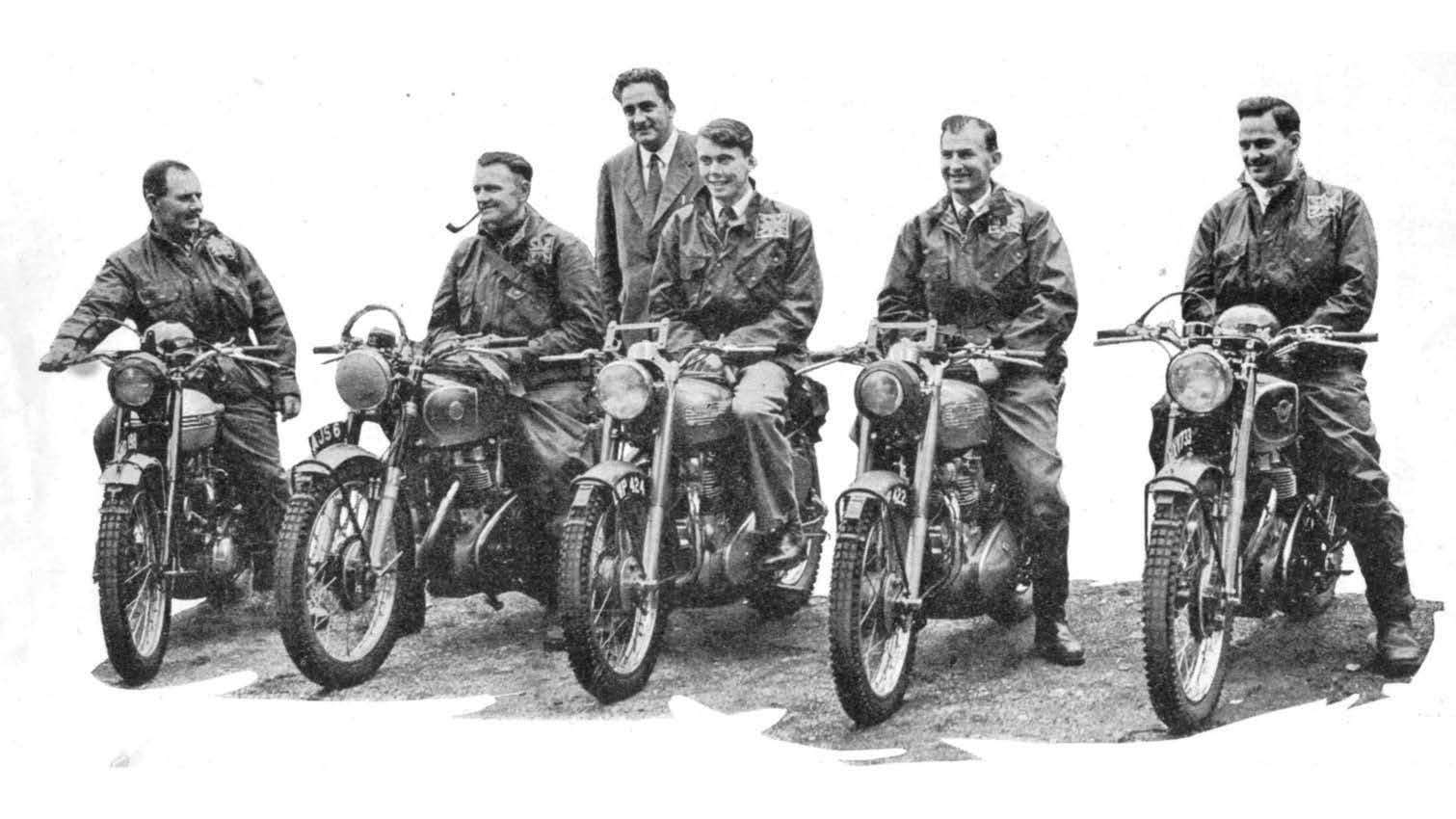
Développée spécifiquement pour les 'International Six Days Trial' (ISDT) de 1936, la Barbour International est devenue si populaire, qu'elle était portée par quasiment chaque équipe anglaise jusqu'en 1977. En 1964 l'International était exclusivement portée par l'équipe américaine d'ISDT, qui comptait dans ses rangs le légendaire cascadeur Bud Ekins (auteur du fameux saut de barbelés dans «La Grande Evasion») et son ami acteur, Steve McQueen.
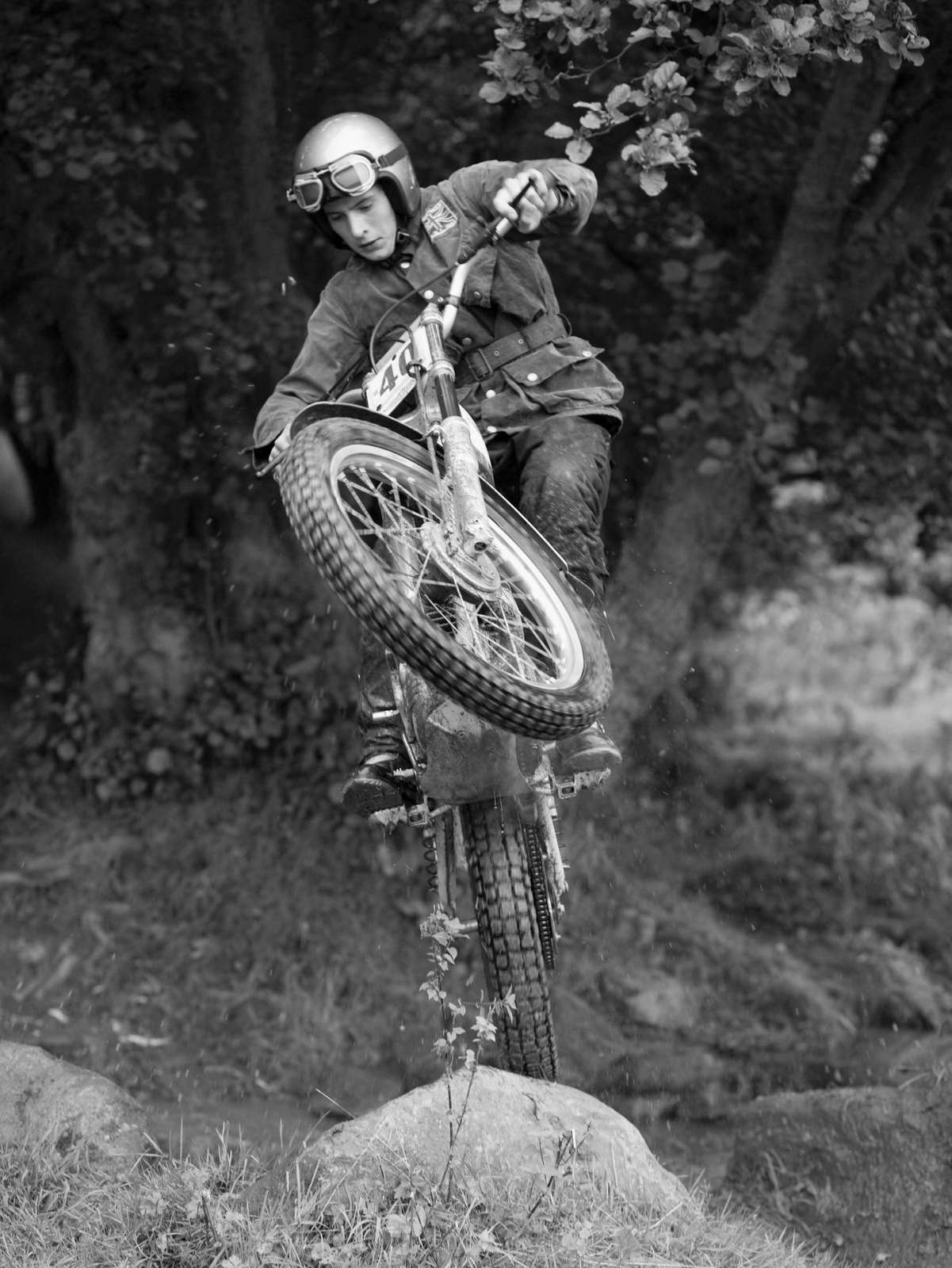
In 1936, Duncan Barbour, the grandson of founder John Barbour and himself a keen motorcyclist, introduced into the range a one piece wax cotton suit called the Barbour International. Developed specifically for the 1936 International Six Day Trials (ISDT) event, and hence its name, the Barbour International became so popular that it was worn by almost every British team right up until 1977. In 1964, the International was worn exclusively by the American ISDT team which counted within its ranks both the legendary stunt rider, Bud Ekins, (whose film credits included 'The Great Escape' fence leap) and his actor friend, Steve McQueen.
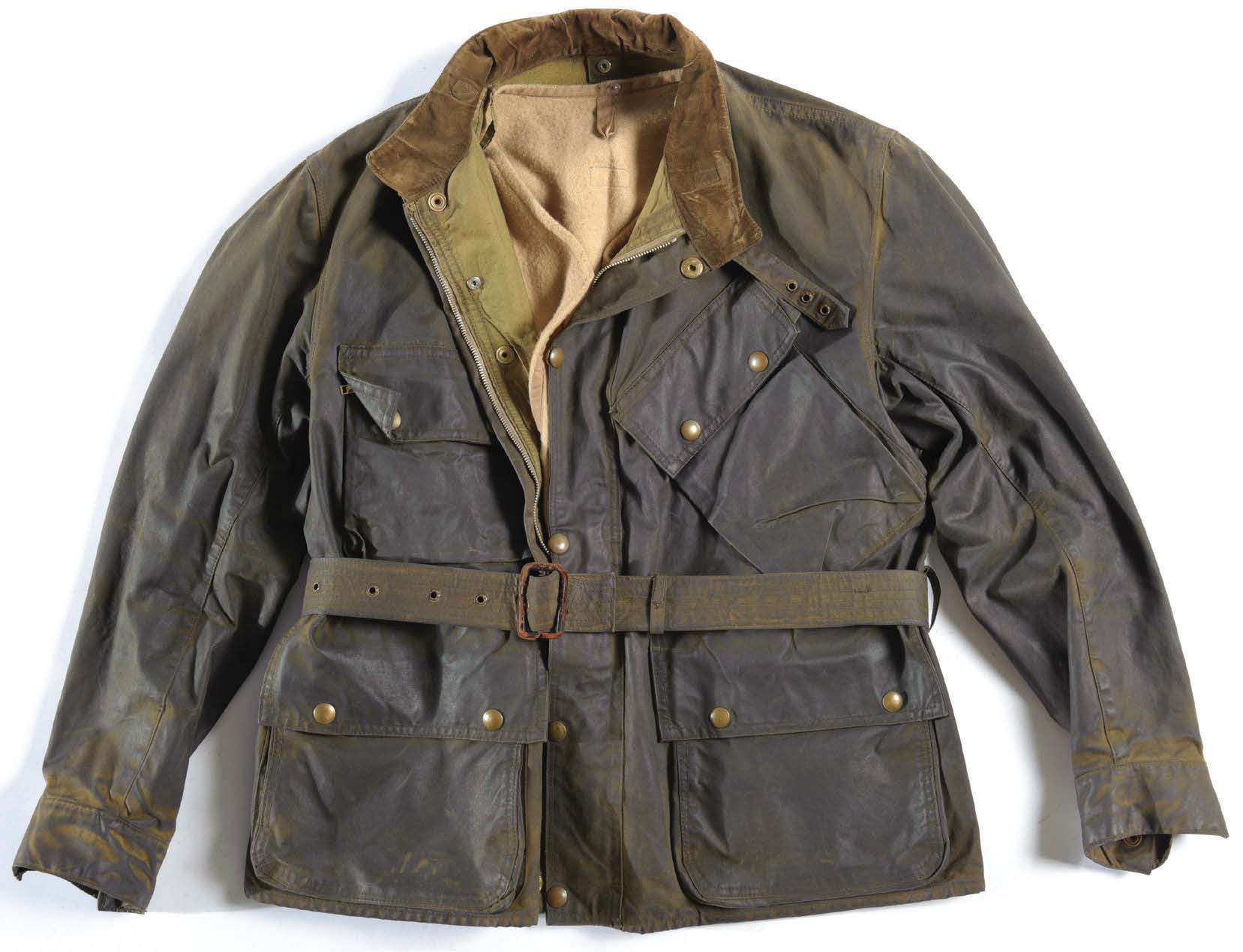
THE BARBOUR INTERNATIONAL SUIT INTRODUCED IN 1948
Le blouson, devenu aujourd'hui une icone internationale a démarré sa carrière comme élément d'un ensemble. Offert aux Archives Barbour par Mr J Moody, cet ensemble deux pièces avait été originellement acheté en 1953. Equipé de sa ceinture et de sa doublure d'origine, l'ensemble de Mr Moody est d'une couleur olive rare, une teinte qui passera au noir au début des années soixante, pour répondre à la demande du Club des Propriétaires de Moto Vincent, qui finirent par adopter la version noire de cet ensemble comme uniforme.
-
The jacket that has now become an International icon first started its life as part of a suit.
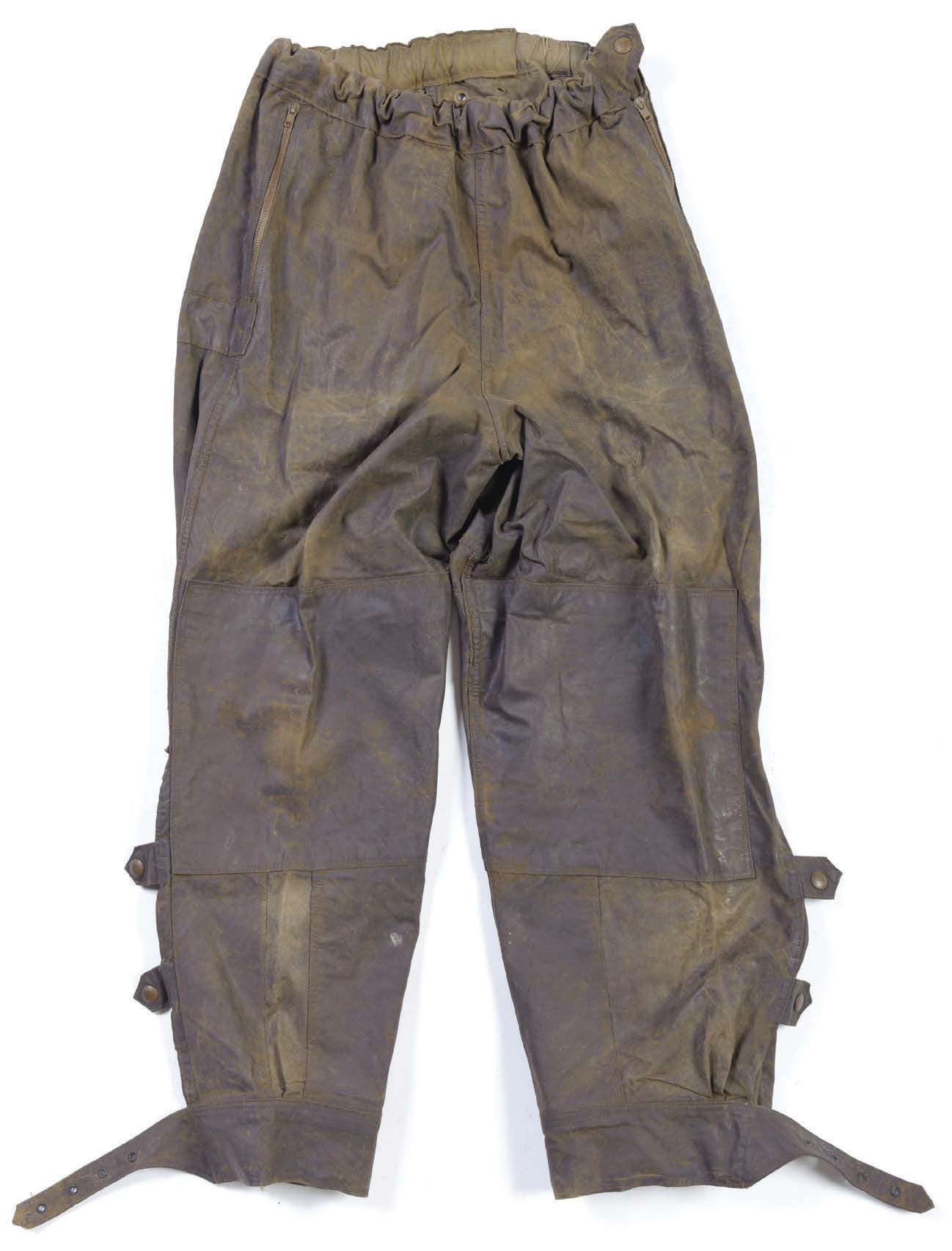
Donated to the Barbour archive by Mr J Moody, this two-piece suit was originally purchased in 1953. Complete with its original belt and warm pile lining, Mr Moody's suit comes in a rare olive colour - a shade that was changed to black in the early sixties following a request from the Vincent Motorcycle Owners Club, who then went on to adopt the black version of this suit as their uniform.
THE BARBOUR RACING OVERSUIT INTRODUCED IN 1961
Cette combinaison a été offerte aux Archives Barbour par Ian Franks, qui affirmait qu'elle appartenait à l'origine à John Vicars, dont Franks assurait qu'il était le créateur de la Triton - une moto hybride assemblée par des passionnés dans les années soixante et soixante dix, associant un moteur de Triumph Bonneville à un cadre de Norton Featherbed ('Triton' étant un amalgame de Triumph et Norton).
-
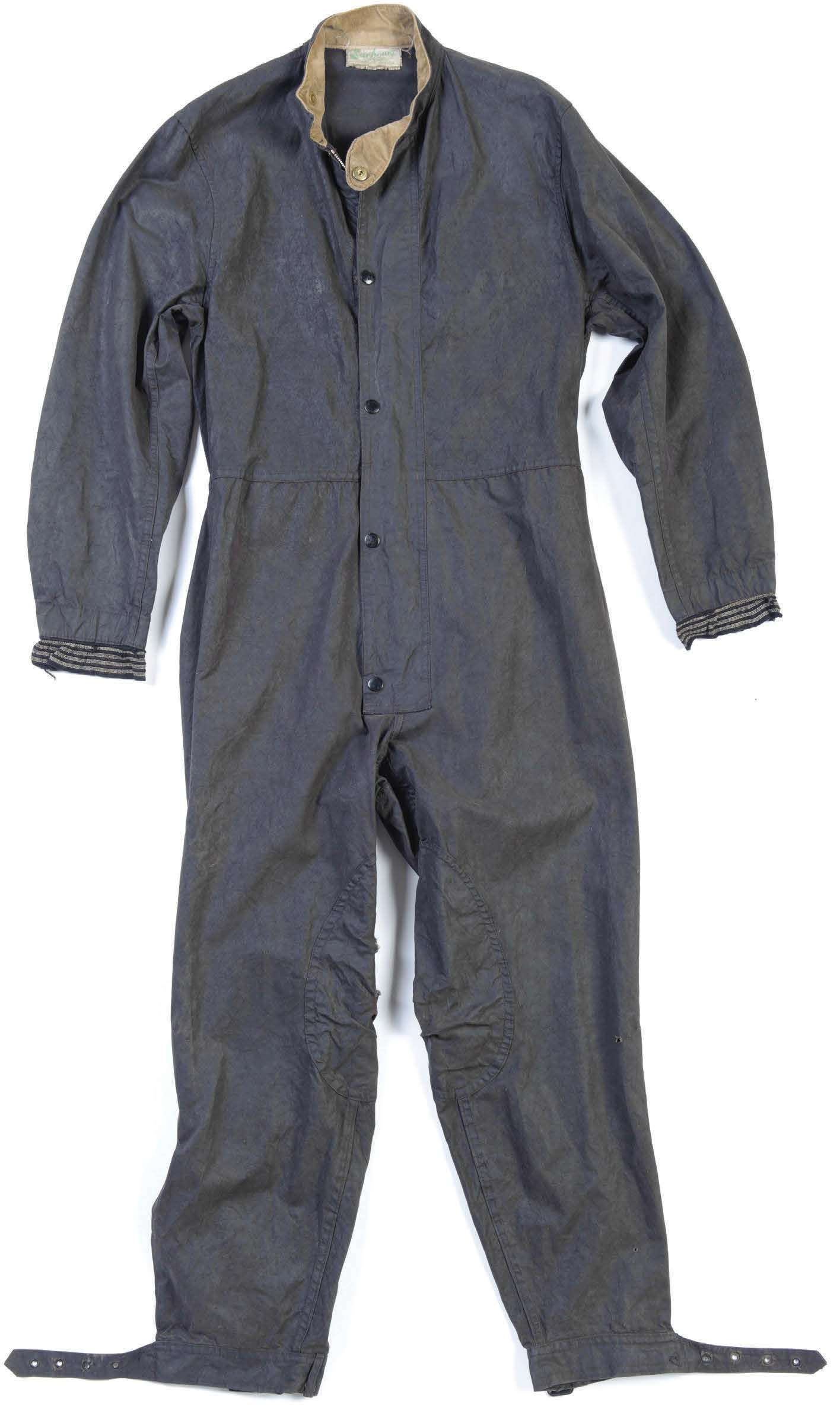
This suit was donated to the Barbour Archive by Ian Franks, who said that it had originally belonged to John Viccars, who Franks claimed was the 'originator' of the Triton motorbike - a hybrid bike built privately in the 1960s and 70s by fitting a Triumph Bonneville engine to a Norton Featherbed frame ('Triton' being an amalgam of Triumph and Norton).
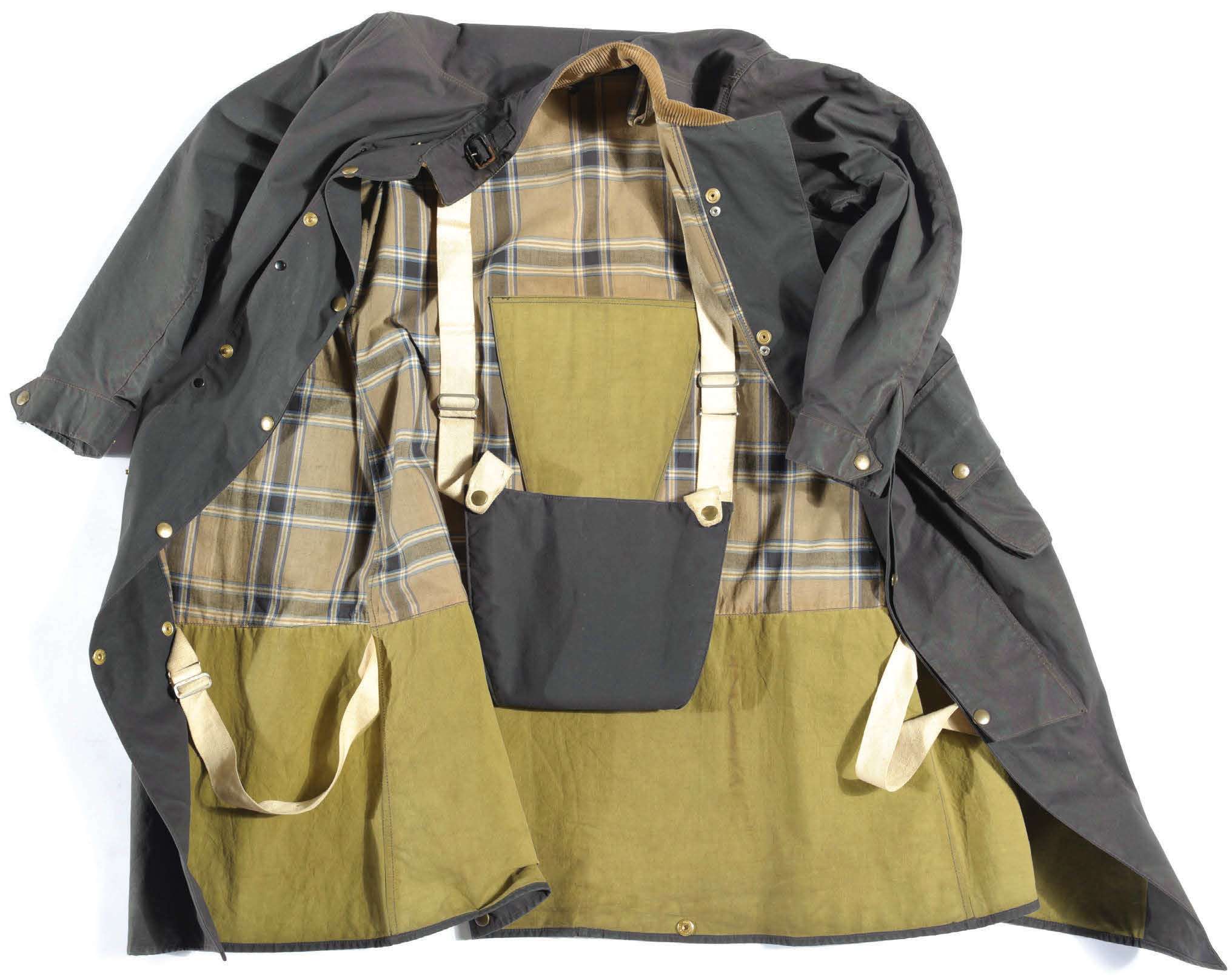
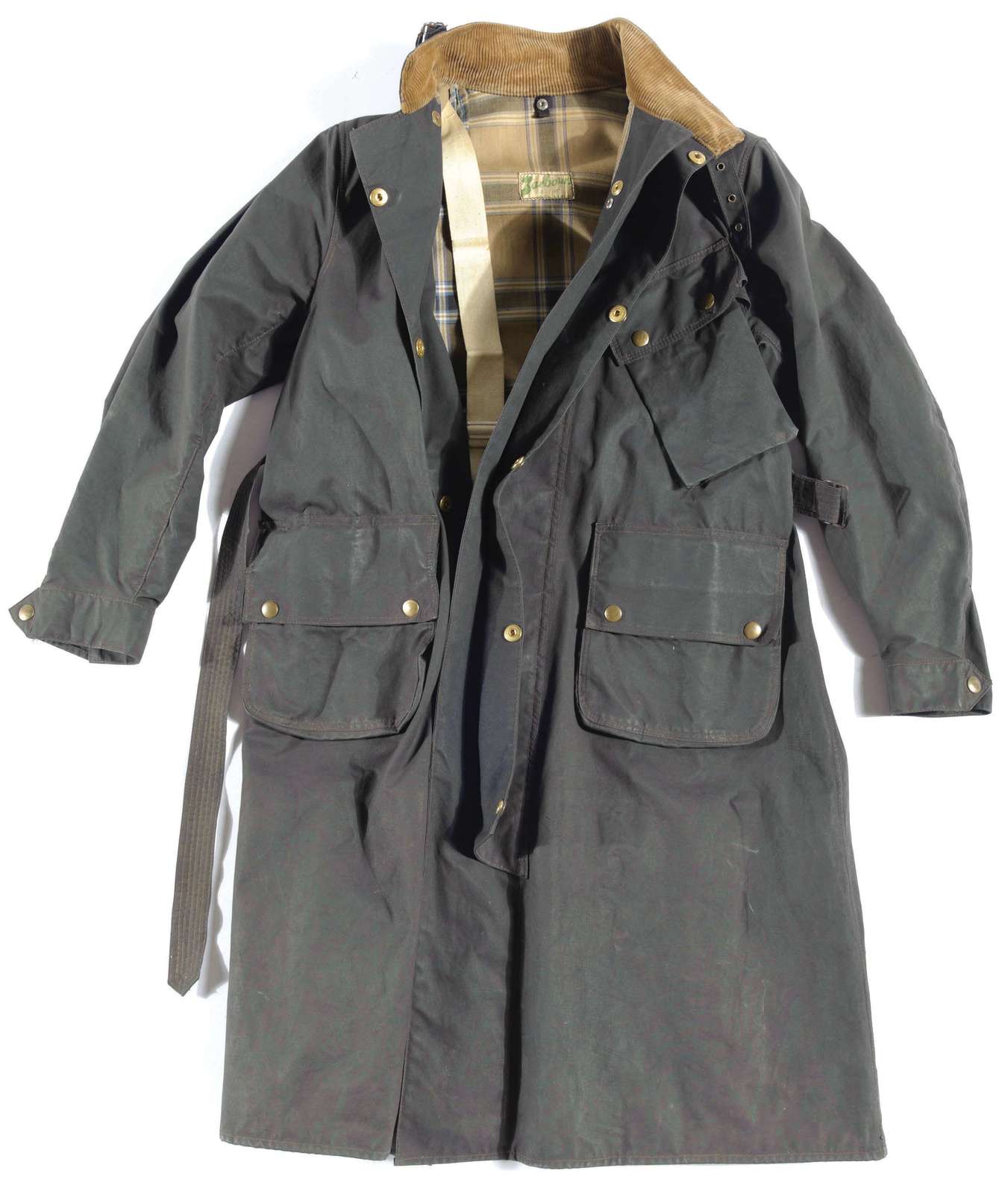
THE BARBOUR TOURING COAT INTRODUCED IN 1953
Ce manteau de voyage est un véritable condensé du savoir-faire Barbour. A une époque où les motos étaient plus nombreuses que les voitures, le magazine 'Power & Pedal' écrivait «Barbour est la Rolls Royce des vêtements moto».
Ce manteau moto de voyage est une pièce d'histoire de la moto.
-
This is a belt and braces of a Barbour - the equivalent in its day, when motorcycles were more numerous than cars, of luxury travel.
As 'Power and Pedal' Magazine wrote during this time of Barbour, 'Barbours is the Rolls Royce of Motorcycle Clothing'. Featuring braces to hold the coat together against the wind, and a snug 'tummy pad' to protect the wearer from the elements, this Motorcycle Touring Coat is a piece of motorcycle history in itself.
Rédaction MOTO HEROES HORS-SERIE